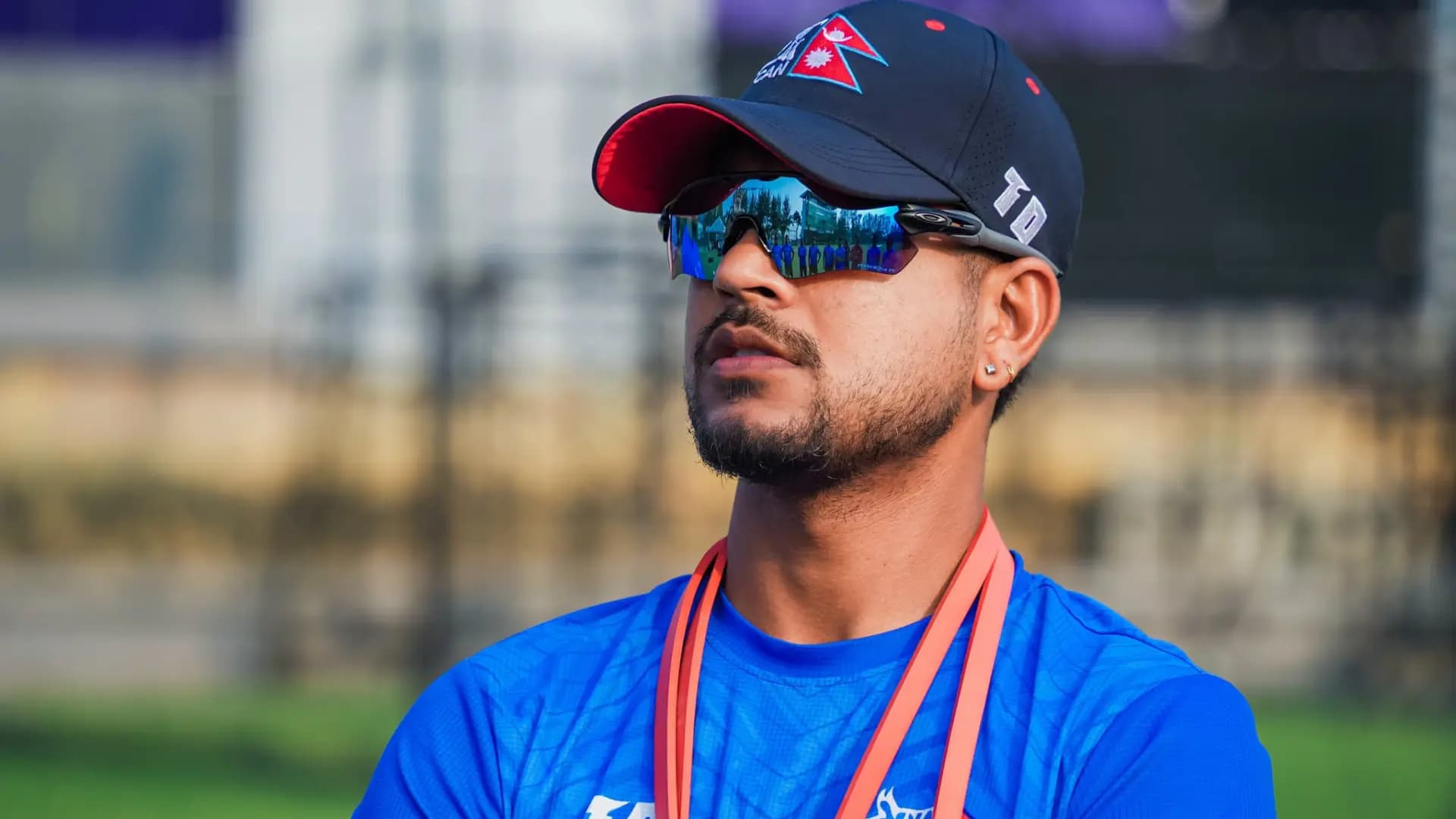
Sandeep Lamichhane has credited Nepal's collective effort for their ACC Premier Cup success, while warning that the team must quickly turn its attention to the challenges ahead, particularly protecting its ODI status.
In a wide-ranging interview with Kantipur TV, Nepal's ODI captain discussed the preparation and selection decisions behind the campaign, his hopes for the Asian Games and the opportunities offered by the Nepal Premier League (NPL). Throughout, he returned to a consistent message: individual achievements matter most when they help Nepal win.
Lamichhane said the Premier Cup campaign had been built through preparation at home and in India, with practice matches treated as seriously as the tournament itself. He credited the Cricket Association of Nepal for its trust and said contributions extended beyond those who made the playing XI.
"Everyone worked equally hard, whether they played or did not play, including the support staff. That is why we achieved this success," he said.
Having experienced leaders around him also eased the demands of captaincy. Lamichhane highlighted the advice available from teammates who had led Nepal or captained domestic and franchise sides, while praising the support staff for making individual roles clear.
Conditions shaped Nepal's reliance on spin. Lamichhane said the approach had been considered before departure, with the squad's spin options offering flexibility and Gulshan Jha able to contribute seam overs when required. He stressed that the balance of the attack did not reflect a lack of confidence in the younger fast bowlers.
The semi-final against Oman tested both that planning and Nepal's resolve. Reflecting on the difficult batting conditions, Lamichhane said the partnership involving Dipendra Singh Airee had given the bowlers something to defend. His message at the interval was to leave nothing in reserve.
"Play as though this is the last game of our lives," he recalled telling the team. "Give everything you have. We can talk about the result afterwards."
Selection, he explained, was guided by the surface and opposition. Nepal wanted an additional spin option and a left-handed batter for the semi-final, a combination that meant Arjun Kumal missed out despite his earlier contributions.
Lamichhane praised Kumal's response on returning for the final, pointing to his opening partnership with Aasif Sheikh and the importance of that start to the team. He described Kumal as a player with a strong future who needed time and support to develop further.
Discussing the final against UAE, Lamichhane singled out Sheikh's assurance at the crease but placed the innings within a broader batting effort. Contributions throughout the order, followed by the bowlers' composure, had been essential.
He said Nepal could not assume their batting effort had made the result safe because the surface remained good for scoring. Finishing strongly had lifted the dressing-room atmosphere, but the bowlers still had to work for control.
Lamichhane was equally willing to acknowledge the opposition when reflecting on the defeat to Hong Kong. He credited an exceptional opposition innings and said there were days when a team had to recognise how well an opponent had played.
The campaign also unfolded against distressing news of floods back home. Lamichhane said players followed the updates closely and felt a responsibility to offer supporters some happiness during a painful period.
That motivation, he said, extended to Nepalis abroad who were helping the relief effort. Cricket could offer a moment of celebration, even as the team remained conscious of what people were enduring.
Looking ahead, Lamichhane expressed confidence in Nepal's ability to compete for an Asian Games medal if the players performed close to their capabilities. He said adapting to unfamiliar conditions in Japan would be important and stressed that every match deserved full attention.
The prospect of facing Afghanistan brought back memories of watching Nepal’s 2014 T20 World Cup victory from Chitwan. Lamichhane said the current players had an opportunity to create another significant result, while recognising the quality available to Afghanistan.
For the ODI side, however, his immediate concern was League 2 and retaining Nepal's status.
"My main focus right now is on these coming months rather than the Asia Cup," he said. "We have a responsibility to protect our ODI status."
He urged players outside the T20 squad to maintain their preparation, saying everyone needed to understand the importance of the approaching assignments.
Asked about personal milestones, Lamichhane placed team results first. His larger ambition remained playing Test cricket for Nepal, although he acknowledged that progress would have to come through performances and making opportunities count.
"I want to see Nepal playing Test cricket, and I want to be part of that team myself," he said.
The NPL, meanwhile, offered players a chance to learn directly from established internationals. Lamichhane said sharing a dressing room could improve understanding of preparation, discipline and handling pressure.
Recalling his experience alongside David Warner, he described the Australian as an energetic, passionate cricketer whose experience could benefit players across the league.
Lamichhane also praised CAN's efforts to secure international opportunities and highlighted Nepal's supporters and hospitality as part of its appeal. The players, he said, had a responsibility to repay that work through performances.
He ended with an appeal that went beyond cricket, urging supporters to help those affected by the floods.
"Let us help one another as much as we can," he said. "This is the time to show one another love, respect and goodwill."
Watch the full interview:
Follow this story
More from Interview
CAN seeks Lower Mulpani handover before 2027 U19 Women's World Cup
Paras Khadka: CAN directly decides captaincy but does not select players
Kushal Bhurtel: Nepal’s opening stand mattered more than his century