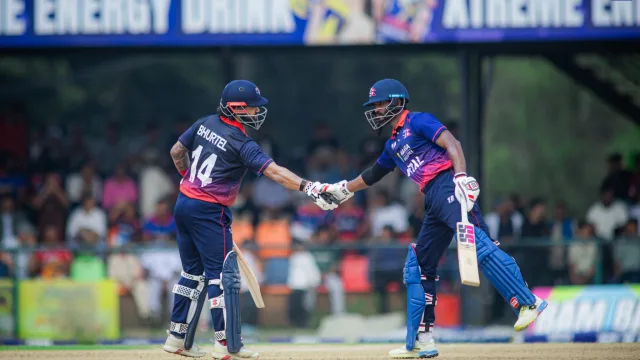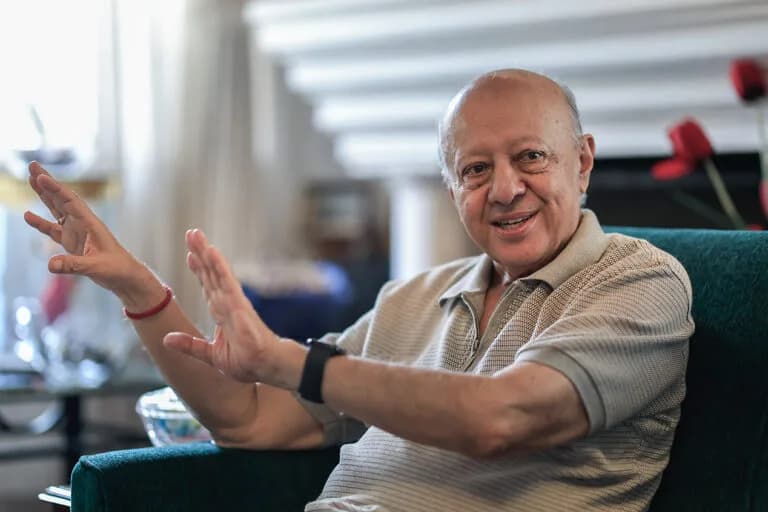
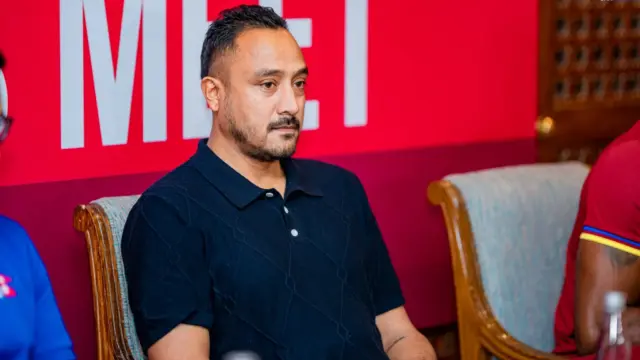
Former Cricket Association of Nepal president Binaya Raj Pandey says the current dispute over the TU cricket ground has grown because Nepal cricket authorities failed to pay enough attention to renewing the agreement on time.
Speaking to Kantipur Television on the future of the TU International Cricket Ground, Pandey said the venue has been central to Nepal cricket's rise and should be viewed as one of the sport's foundational assets in the country rather than as a disposable piece of land.
Pandey said Nepal cricket took a major step forward only after moving from matting wickets in Tundikhel to a proper cricket surface at TU. According to him, that shift changed not only the quality of play but also the development of batting, bowling and other cricketing skills.
He described the move to TU as one of the biggest turning points in Nepal cricket's development, saying the ground effectively became the backbone of the sport in the country. He added that the availability of proper nets and a true playing surface gave players a far better environment to train and improve.
Pandey also recalled how the original lease arrangement came together. He said the ground had barely been used at the time and that discussions with university officials eventually led to an initial short-term arrangement, which later evolved into a longer 25-year model as confidence in the project grew.
In his view, the present controversy should not be framed as a question of destroying the stadium, but as a failure to manage an important national cricket asset with long-term clarity. He suggested that TU has the potential to serve not only Nepal cricket but also, in the future, as a neutral venue of wider regional value in South Asia.
His comments come at a time when the future operating model of the TU ground remains under discussion between the Government of Nepal and Tribhuvan University, after the university issued a notice related to the expiry of the existing lease.
Follow this story
More from Interview
Sandeep Lamichhane credits collective effort, sets sights on Nepal's next challenges
CAN seeks Lower Mulpani handover before 2027 U19 Women's World Cup
Paras Khadka: CAN directly decides captaincy but does not select players